



Surface finishing affects more than the appearance of a CNC machined part. It can influence corrosion resistance, wear performance, friction, electrical conductivity, cleanability, traceability, and long-term reliability.
A part may meet all dimensional requirements after machining but still encounter problems after finishing. Coating thickness can affect holes and threads, anodizing may influence tight-fit features, polishing can alter edge geometry, and poor process planning may lead to cosmetic or assembly issues.
For this reason, surface finishing should be considered together with material selection, machining strategy, tolerance requirements, and final application. The most suitable finish depends on the part’s function, operating environment, appearance requirements, and production stage.
At Rapid MFG Online, we review machining and finishing requirements as one integrated process to help reduce manufacturing risks and improve consistency from prototype through low-volume production.
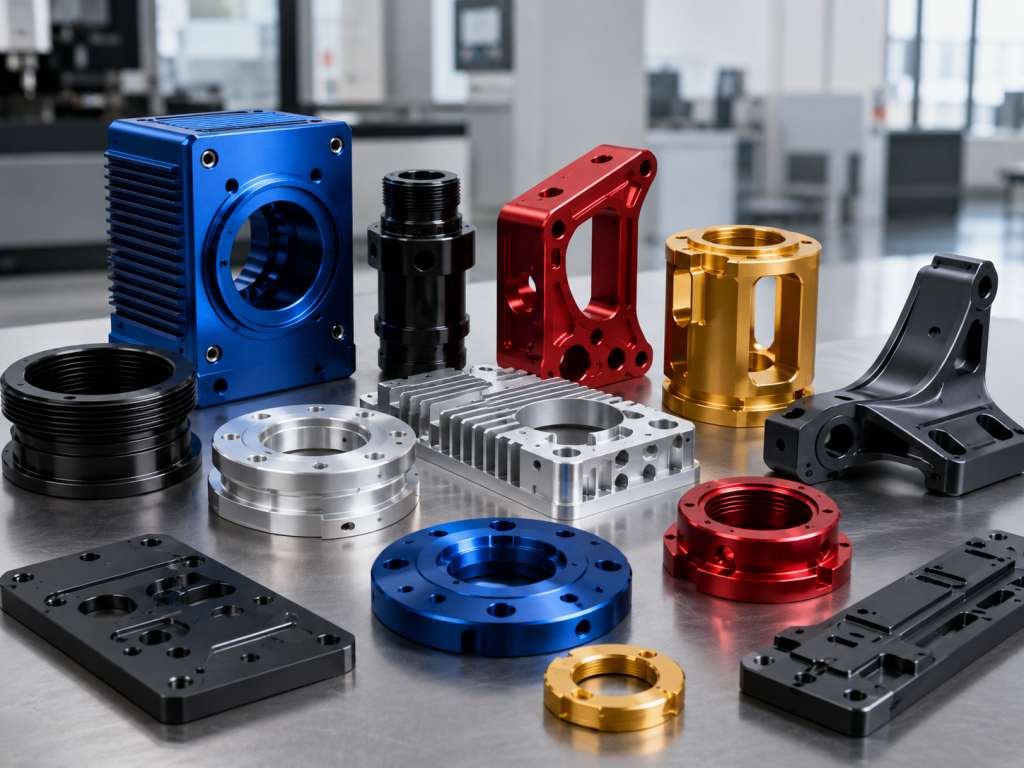
Common Surface Finishes for CNC Parts
Different CNC parts require different finishing methods. The right choice depends on material, geometry, function, tolerance, environment, appearance, and production quantity.
As-Machined Finish
As-machined parts are delivered after CNC machining, with tool marks visible unless otherwise specified. This is often suitable for prototypes, internal structures, fixtures, functional test parts, and components where appearance is not critical.
As-machined does not mean uncontrolled. Burr removal, edge break, visible tool marks, and required roughness should still be defined when they affect assembly or function.
Suitable For | Engineering Notes |
Prototypes | Fast option for dimensional and assembly validation |
Internal brackets | Acceptable when appearance is not important |
Fixtures and test parts | Good for functional validation |
Tight tolerance parts | Avoids coating thickness issues |
If the part requires a specific Ra value, tool mark direction, no-burr area, or controlled edge break, these requirements should be shown on the drawing.
Bead Blasting
Bead blasting creates a uniform matte texture by treating the surface with fine media. It is commonly used on aluminum and stainless steel CNC parts for a clean, non-reflective appearance.
Bead blasting is mainly a cosmetic and texture-control process. It should not be used to correct dimensional defects, deep tool marks, dents, or poor machining quality.
Suitable For | Engineering Notes |
Aluminum housings | Creates a uniform matte texture before anodizing |
Instrument panels | Reduces visible tool marks |
Consumer and medical equipment parts | Provides a clean technical appearance |
Stainless steel components | Improves surface uniformity |
Risks include uneven blasting, over-blasting sharp edges, media contamination, and inconsistent appearance between batches. Masking may be needed for threaded holes, sealing faces, polished areas, or tight-fit surfaces.
Anodizing
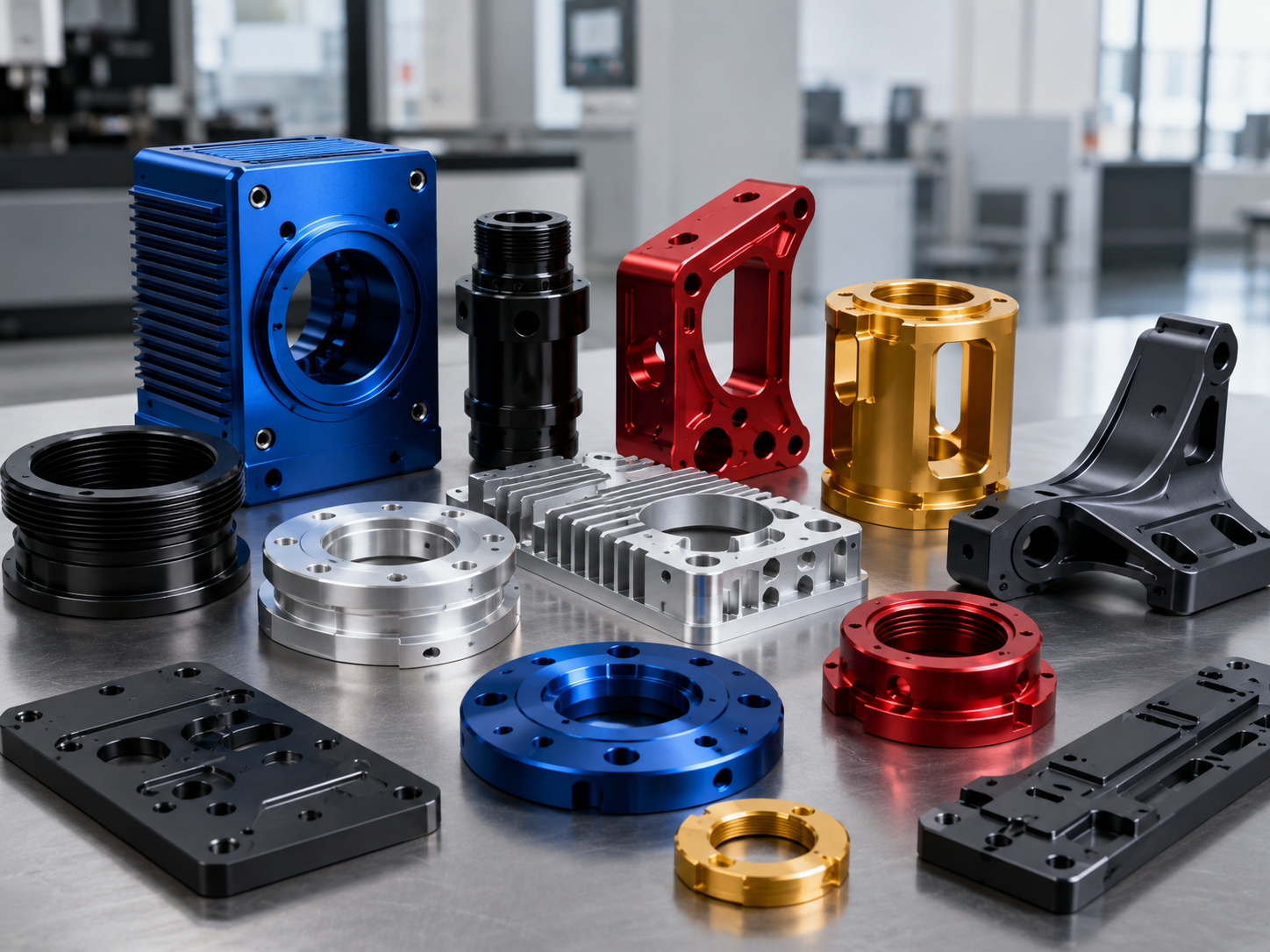
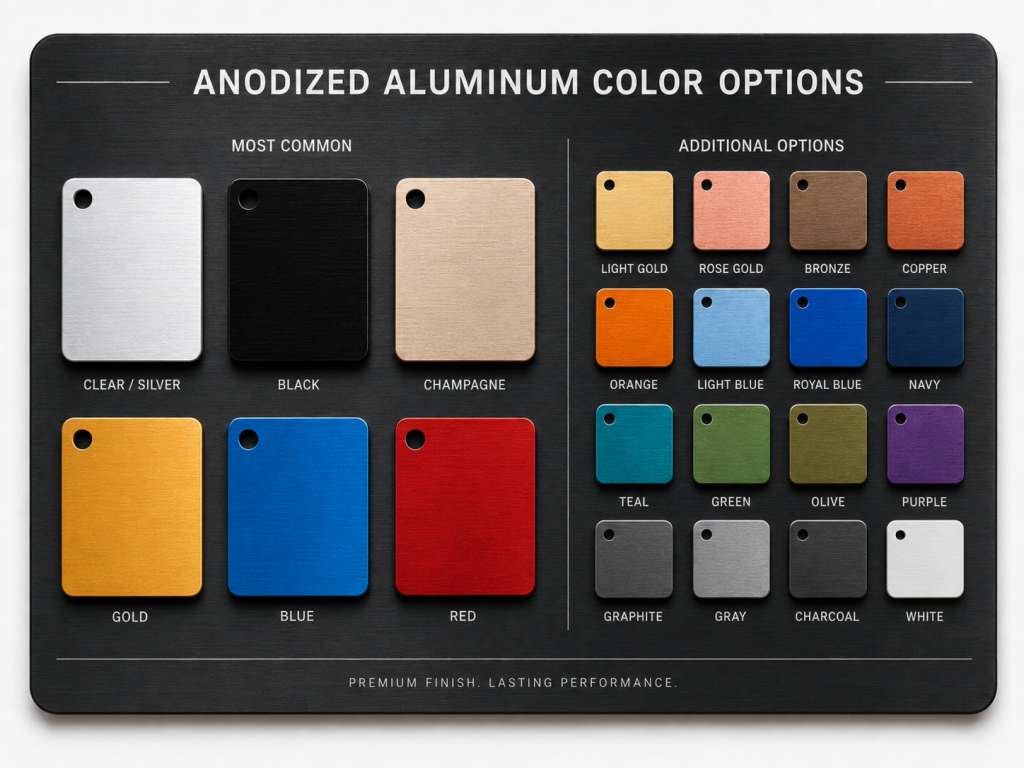
Anodizing is one of the most common finishes for aluminum CNC parts. It improves corrosion resistance, surface hardness, wear resistance, and appearance. It can also provide different colors such as clear, black, red, blue, gold, or customer-specified colors.
Anodizing is widely used for enclosures, brackets, instrument panels, optical mounts, robotic components, medical equipment parts, electronic housings, and industrial devices.
Suitable For | Engineering Notes |
Aluminum housings | Improves appearance and corrosion resistance |
Brackets and frames | Provides surface protection |
Instrument parts | Supports color coding and product identity |
Optical and sensor mounts | Black anodizing can reduce reflection |
Anodizing affects dimensions because it creates an oxide layer. For tight holes, sliding fits, threaded areas, grounding points, and assembly interfaces, this must be reviewed before machining.
Important considerations include coating thickness, alloy selection, color consistency, surface preparation, masking, contact marks, and final inspection condition.
Anodizing should not be treated as a way to hide poor machining marks. The final appearance depends strongly on the machined surface before finishing.
Hard Anodizing
Hard anodizing is used when higher wear resistance and surface hardness are required. It is usually thicker than standard anodizing and is common for aluminum parts exposed to friction, sliding, abrasion, or demanding environments.
Suitable For | Engineering Notes |
Wear-resistant aluminum parts | Improves surface hardness |
Sliding components | Requires review of clearance and friction |
Industrial equipment parts | Provides better durability than standard anodizing |
Functional aluminum components | Useful when protection matters more than color |
Hard anodizing can significantly affect dimensions. Bores, slots, grooves, threads, and mating surfaces require careful review. Color options may be limited, and final appearance can vary depending on alloy and coating thickness.
When hard anodizing is required, the drawing should define coating thickness, masking areas, tolerance after finish, and inspection method.
Passivation
Passivation is commonly used for stainless steel parts. It removes surface contaminants and improves corrosion resistance by supporting the formation of a protective oxide layer.
Passivation does not create a visible thick coating like paint or plating. It is mainly a chemical treatment used to improve stainless steel surface condition.
Suitable For | Engineering Notes |
Stainless steel equipment parts | Improves corrosion resistance |
Laboratory equipment components | Useful for cleaning and corrosion control |
Precision stainless structures | Minimal dimensional impact |
Instrument parts | Maintains metallic appearance |
Passivation is not a solution for poor material selection, heavy scratches, welding defects, or surface damage. The part must be properly cleaned and prepared. If the surface condition is poor, passivation alone may not solve the problem.
Electropolishing
Electropolishing is used mainly for stainless steel. It removes a thin layer from the surface and can improve smoothness, brightness, cleanability, and corrosion resistance.
It is more suitable for improving surface condition and cleanability than for correcting machining defects.
Suitable For | Engineering Notes |
Stainless steel fluidic components | Helps improve cleanability |
Laboratory equipment parts | Creates a smoother surface |
Medical equipment structures | Useful for controlled surface condition |
Precision metal parts | Requires dimensional review |
Electropolishing can round edges and slightly change dimensions. It may affect sharp features, thin edges, threads, and small holes. If the part has tight tolerance requirements, the material removal amount should be discussed before production.
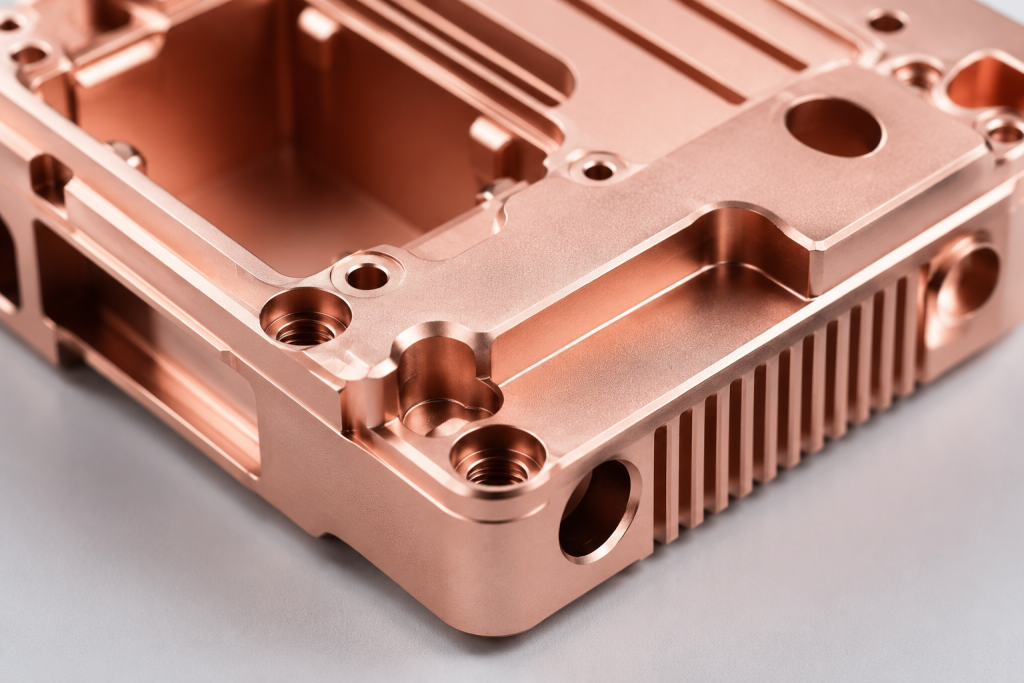
Plating
Plating adds a metal layer to the part surface. Common plating options may include electroless nickel, nickel, zinc, tin, and other customer-specified coatings depending on material, function, environment, and regulatory requirements.
Plating may improve corrosion resistance, hardness, wear resistance, conductivity, solderability, or appearance.
Plating Type | Common Use |
Electroless nickel plating | Uniform coating, corrosion resistance, wear resistance |
Nickel plating | Appearance and corrosion protection |
Zinc plating | Corrosion protection for steel parts |
Tin plating | Conductivity and solderability in selected applications |
Customer-specified coatings | Used when drawing or specification requires a particular finish |
Electroless nickel plating is often preferred when more uniform coating thickness is required. However, plating still affects dimensions and may build up on threads, holes, edges, and mating surfaces.
Plating should be specified clearly, including type, thickness, applicable standard if required, masking areas, and post-treatment requirements.
Powder Coating
Powder coating creates a durable painted surface by applying powder and curing it with heat. It is commonly used for larger housings, panels, frames, covers, and external components.
Powder coating provides good appearance and corrosion protection, but it creates a relatively thick coating compared with anodizing or passivation.
Suitable For | Engineering Notes |
Equipment housings | Durable external finish |
Panels and covers | Good color and texture options |
Industrial components | Stronger surface protection than standard paint |
Structural frames | Useful for larger parts |
Powder coating can interfere with tight fits, threads, small holes, sliding surfaces, and mating interfaces. Masking is often required.
For CNC machined parts, it is important to confirm whether the coating is cosmetic or functional. If the part has precision features, coating thickness must be included in the dimensional plan.
Painting
Painting is used for appearance, branding, protection, and color matching. It is common for external housings, covers, panels, and user-facing parts.
Painting can provide flexible color and gloss options. It may be used on both metal and plastic parts when surface preparation and adhesion are properly controlled.
Suitable For | Engineering Notes |
External housings | Color and branding control |
User-facing panels | Cosmetic finish |
Plastic and metal parts | Requires surface preparation |
Low-volume parts | Useful when tooling is not justified |
Painting has risks. Adhesion may fail if surface preparation is poor. Coating thickness may vary. Edges may show buildup. Sharp corners may have weaker coverage.
For high-quality painted parts, the drawing or specification should include color code, gloss level, texture, acceptable defects, masking areas, and inspection method.
Polishing
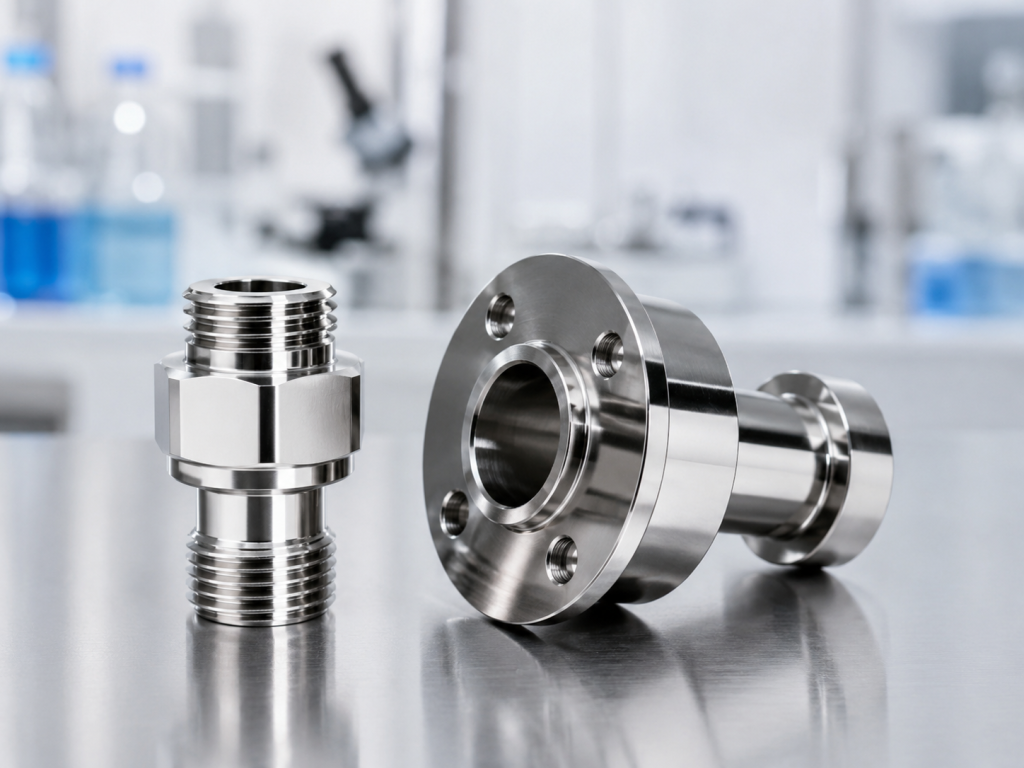
Polishing improves smoothness, reflectivity, and appearance. It may be used for stainless steel, aluminum, brass, copper, and selected plastic parts.
Polishing can reduce visible tool marks and improve selected cosmetic or functional surfaces. It may support sealing-related surfaces when flatness and geometry are controlled.
Suitable For | Engineering Notes |
Stainless steel parts | Bright or smooth appearance |
Selected sealing surfaces | Requires flatness and geometry control |
Optical or display-related parts | Surface quality is critical |
Transparent plastics | Requires care to avoid stress or scratches |
Polishing should be specified by area. Full-part polishing may be unsuitable for components with tight flatness, sharp functional edges, precision bores, or sealing geometry.
Polishing can change geometry. It may round edges, reduce sharp details, affect flatness, and create inconsistent appearance if not controlled.
Brushing
Brushing creates a directional line texture on the surface. It is commonly used for aluminum and stainless steel panels, covers, and visible components.
Suitable For | Engineering Notes |
Front panels | Creates controlled directional texture |
Covers and housings | Improves appearance |
Stainless steel components | Common for visible metal parts |
Aluminum parts | Can be combined with anodizing |
The brushing direction should be defined. If multiple parts are assembled together, inconsistent grain direction can create visible appearance mismatch.
Black Oxide
Black oxide is commonly used for steel parts to provide a black appearance and mild corrosion resistance. It has minimal dimensional impact compared with thick coatings.
Suitable For | Engineering Notes |
Steel components | Black appearance with limited thickness |
Tooling parts | Common for functional metal parts |
Fixtures | Low dimensional impact |
Internal mechanical parts | Useful where appearance and mild protection are needed |
Black oxide is not a strong corrosion protection solution by itself. Oil or sealing treatment may be required depending on the environment. It should not be selected if the part needs strong outdoor corrosion resistance.
Laser Engraving and Marking
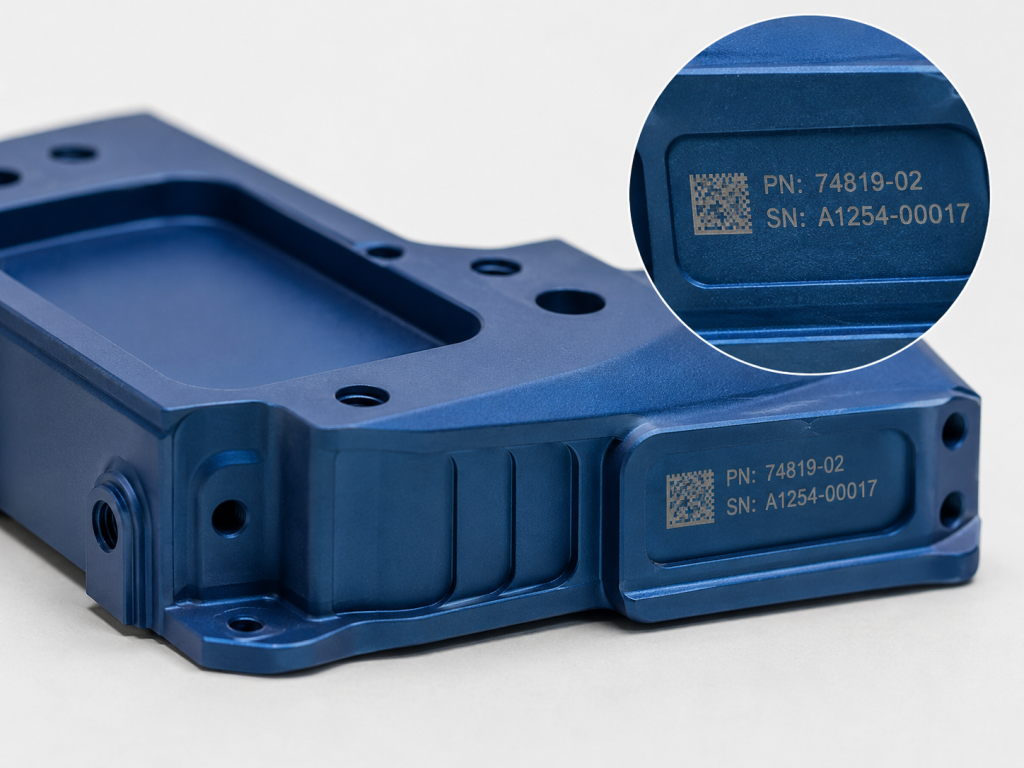
Laser engraving is used for part numbers, logos, serial numbers, batch codes, orientation marks, and traceability information.
Suitable For | Engineering Notes |
Traceability marks | Serial number, batch number, QR code |
Product branding | Logo and model name |
Assembly marks | Orientation and functional labels |
Industrial and equipment parts | Permanent marking when required |
Marking should be planned with the finishing process. Laser marking before anodizing may look different from marking after anodizing. Painted or coated surfaces may require different marking settings.
Mark position, size, depth, contrast, and readability should be confirmed. For functional parts, marking should not be placed on sealing surfaces, sliding areas, high-stress zones, or precision mating features unless approved.
Common Surface Finish Failure Modes
Many surface finish problems are predictable. They usually come from unclear requirements or poor coordination between machining and finishing.
Failure Mode | Typical Cause |
Thread assembly failure | Coating buildup or no masking |
Color mismatch | Different alloy, batch, surface preparation, or anodizing condition |
Poor adhesion | Insufficient cleaning or unsuitable substrate |
Visible tool marks after anodizing | Machining marks not removed before finishing |
Rounded critical edges | Over-polishing, blasting, or electropolishing |
Out-of-tolerance holes | Plating or coating thickness not considered |
Cosmetic rejection | No approved sample or unclear inspection standard |
Marking unreadable | Wrong marking sequence or insufficient contrast |
Corrosion issue | Finish not suitable for material or environment |
The best way to reduce these failures is to review finishing requirements before quotation and before machining.
Conclusion
Choosing a surface finish is not only about appearance. It affects how a CNC machined part fits, functions, assembles, performs, and survives in its operating environment.
Because finishing can influence dimensions, tolerances, conductivity, corrosion resistance, wear behavior, and cosmetic quality, it should be reviewed together with machining requirements before production begins. Early engineering review helps identify potential risks related to coating buildup, masking, inspection criteria, finish sequence, and material compatibility.
For prototypes, engineering validation builds, and low-volume production, selecting the appropriate finish at the right stage can reduce cost, shorten development cycles, and improve final product quality.
At Rapid MFG Online, we help customers evaluate machining and finishing requirements together, providing practical engineering feedback before production to support more predictable manufacturing outcomes.